
Partnering with Oyster Growers to Rebuild Reefs
Continue
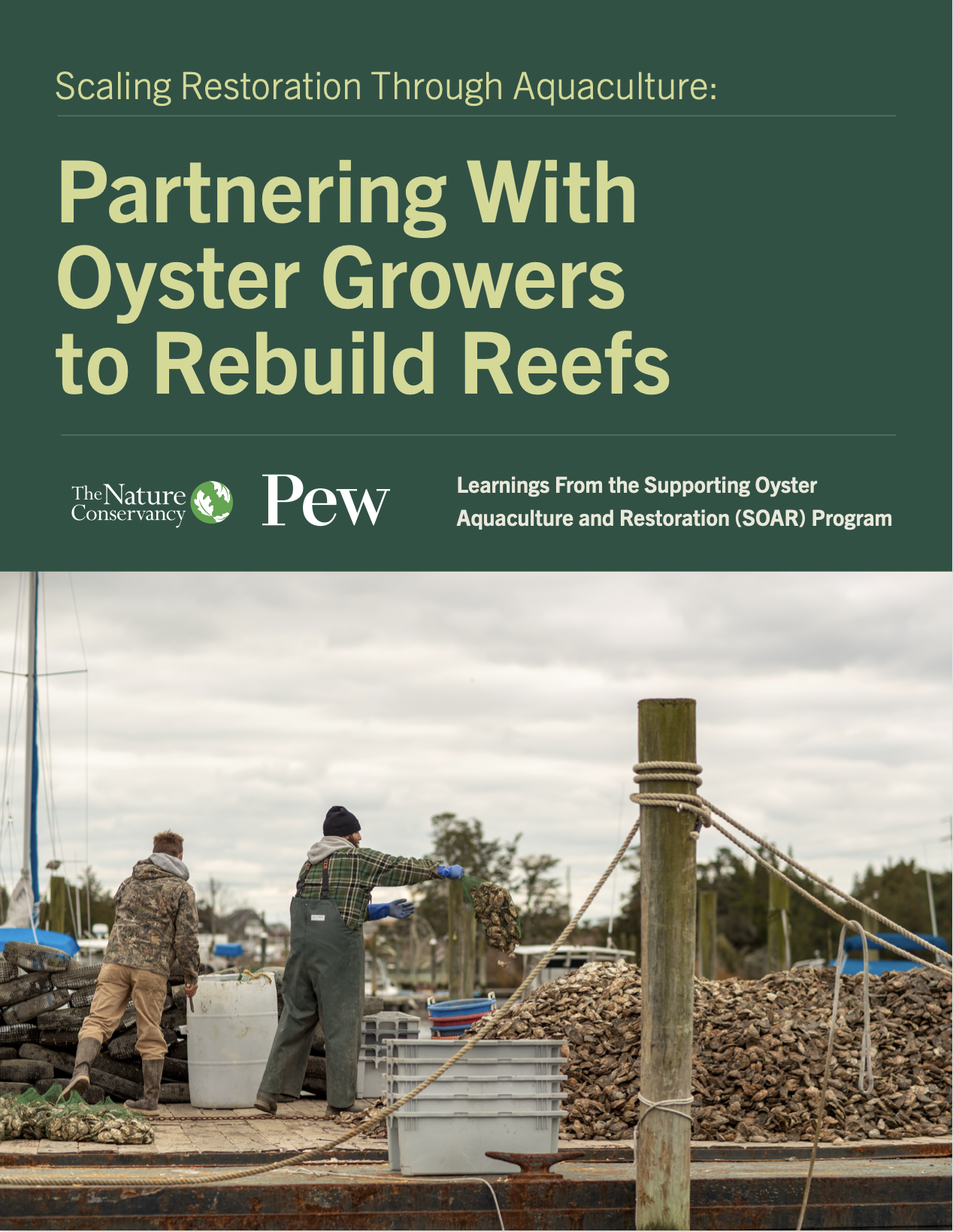
Aquaculture Partnerships Oysters inspected and purchased by SOAR are consolidated prior to deployment at a restoration site. © Sean Graesser
The purpose of this handbook is to describe how to restore the breeding capacity of native oysters by leveraging the expertise, infrastructure, and products of the aquaculture industry.
Oysters are the backbone of many coastal ecosystems, functioning as water filters, habitat architects, and potent agents of nutrient cycling and sediment stabilization. But this keystone species is at risk: globally, about 85% of native oyster reefs have disappeared due to overharvesting, disease, pollution, development and climate change. In many regions, oyster populations have declined so severely that natural reproduction alone can no longer support recovery.
To overcome this challenge, The Supporting Oyster Aquaculture and Restoration (SOAR) program leveraged the shellfish aquaculture industry to provide the expertise, infrastructure, and materials needed to restore oyster reefs. Launched by The Nature Conservancy and The Pew Charitable Trusts in 2020, SOAR purchased adult oysters and shells from U.S. farms and deployed them in restoration projects, providing an additional income stream for growers while aiding in ecosystem recovery.
In total, SOAR purchased more than seven million oysters from 150+ growers, which contributed to the restoration of 60 acres of reef and supported more than 1,000 jobs. This success shows that restoration can be a collaborative enterprise that strengthens coastal communities and working waterfronts—and sets a precedent for coupling industry engagement with large-scale ecosystem recovery. Drawing on lessons from SOAR, this handbook provides practical guidance for conservation practitioners, resource managers, growers, policymakers, and other stakeholders seeking to scale oyster restoration through aquaculture partnerships.